
Technology evolves faster than most people can track—and if you’re searching for clear, reliable insights on the latest digital innovations, smart devices, and secure data trends, you’re in the right place. The real challenge isn’t access to information. It’s knowing which updates actually matter, which innovations are worth your attention, and how they impact your everyday tech decisions.
This article is designed to cut through the noise. We break down emerging tech evolution alerts, explain practical applications of new digital tools, and provide straightforward guidance you can use immediately—whether you’re upgrading devices, protecting your data, or exploring next‑generation interactive systems.
Our insights are grounded in ongoing analysis of industry developments, security research, and hands‑on testing of modern platforms and smart technologies. Instead of hype, you’ll get clarity. Instead of vague predictions, you’ll find actionable explanations.
If your goal is to stay informed, secure, and ahead of the curve, this guide will help you understand what’s changing—and what to do about it.
Beyond the Hype
The metaverse isn’t just VR headsets and sci‑fi avatars. At its core, it’s a persistent digital space where people work, play, and transact in real time. Think Fortnite concerts or virtual offices on Zoom with 3D environments (less Matrix, more Minecraft).
Many argue it’s overhyped—and they’re right that adoption is early. But early doesn’t mean irrelevant. The internet in 1995 looked clunky too.
Here’s the practical breakdown: immersive hardware, shared platforms, digital economies, and identity systems. These metaverse concepts explained in the section form the foundation.
Understanding them helps you evaluate tools, privacy risks, and opportunities ahead.
Defining the Digital Universe: What Is the Metaverse?
The metaverse isn’t a single game or app. It’s a persistent, shared, 3D virtual space where users can interact with each other and with digital objects.
Think of it as the next evolution of the internet. Web1 delivered static pages. Web2 turned them social. Now, Web3/Metaverse aims to make the web immersive and spatial.
Three traits define it: Presence (feeling you’re truly there), Interoperability (seamless travel between virtual worlds), and Persistence (the world exists and evolves even when you’re not in it).
For you, that means richer collaboration, borderless commerce, and deeper learning. Imagine attending a concert with friends across continents or testing a smart device in 3D before buying. The value is access, immersion, and opportunity.
The real advantage is continuity. Because it’s always on, your digital assets, identity, and experiences grow over time—even when you log off. That creates value.
The Seven Layers of the Metaverse Ecosystem
Understanding the metaverse is easier when you compare it to a city. Some people see only the flashy skyline (Layer 7), while others focus on the plumbing and power grid (Layer 1). Both matter—but for different reasons.
Layer 1 – Infrastructure is the backbone: 5G, Wi‑Fi 6, cloud computing, and GPUs (graphics processing units that render complex visuals). Think Verizon vs. your local router—enterprise-grade connectivity enables persistent, shared worlds. Critics argue today’s bandwidth isn’t ready. Fair point. Yet global 5G adoption surpassed 1.5 billion connections in 2023 (GSMA), suggesting the pipes are scaling fast.
Layer 2 – Human Interface includes VR headsets, AR glasses, haptic suits, and mobile devices. VR immerses you; AR overlays digital objects onto reality. Meta Quest vs. iPhone AR filters? Different depth, different use case.
Layer 3 – Decentralization uses blockchain, NFTs (non-fungible tokens, or unique digital assets), and crypto to enable ownership and identity. Some say speculation outweighs utility. Yet decentralized identity systems are being piloted for secure logins (World Economic Forum reports ongoing trials). Ownership vs. platform control—it’s Web3 vs. Web2 all over again.
Layer 4 – Spatial Computing digitizes physical objects into interactive 3D models. Apple Vision Pro demos show how digital objects can anchor to real rooms. Gaming engine physics vs. static webpages—this is the leap.
Layer 5 – Creator Economy tools like Unity and Unreal empower users to build worlds. Compare hiring a studio vs. a solo creator shipping an experience (very “Ready Player One”). Pro tip: follow tool adoption, not hype cycles.
Layer 6 – Discovery determines visibility. Traditional SEO vs. 3D search indexing—who controls findability controls attention.
Layer 7 – Experience delivers gaming, concerts, workspaces, and classrooms. Fortnite events vs. Zoom meetings: same internet, wildly different engagement.
For deeper context on AI’s influence, see how generative ai is redefining creative industries.
These metaverse concepts explained in the section once exactly as it is given reveal one truth: infrastructure enables possibility, but experience drives adoption.
The Technologies Making It All Possible
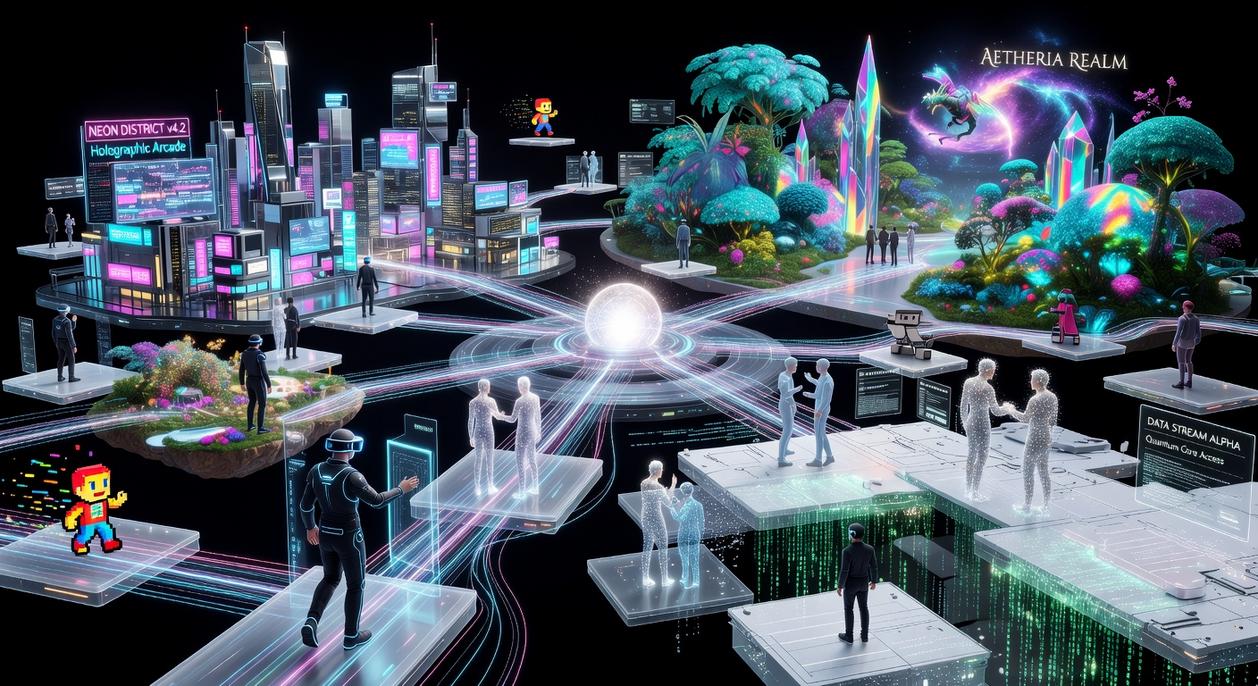
The metaverse concepts explained in the section once exactly as it is given start with Virtual & Augmented Reality (VR/AR). Virtual Reality places users inside fully digital environments using headsets like the Meta Quest, blocking out the physical world for total immersion. Augmented Reality, by contrast, layers digital elements onto your real surroundings—think Pokémon Go or Apple’s Vision Pro overlays. VR delivers escape; AR enhances reality (and yes, sometimes makes your living room a battlefield).
Blockchain & NFTs power ownership. A blockchain is a decentralized digital ledger that records transactions across many computers, making data nearly impossible to alter. NFTs (non-fungible tokens) use this system to verify unique digital assets—avatars, land, skins—ensuring scarcity and proof of ownership. That security builds trust, which is essential for virtual economies to function.
Artificial Intelligence (AI) & 5G Connectivity
Artificial Intelligence (AI) drives responsive NPCs (non-player characters), generates adaptive environments, and personalizes experiences in real time. Meanwhile, 5G & Edge Computing reduce latency—the delay between action and response—by processing data closer to users. The result? Seamless, lag-free 3D streaming. Pro tip: lower latency under 20 milliseconds dramatically improves immersion.
The metaverse today feels impressive—until you compare it to the bigger promise.
Right now, we’re living in what many call “proto-verses.” Platforms like Roblox, Fortnite, and Decentraland offer immersive spaces where users play, socialize, and even earn money. But each world operates as a silo. Your avatar, items, and achievements typically stay locked inside one ecosystem. In other words, this isn’t yet a fully interoperable metaverse.
The Future Vision is far more ambitious: a single, unified, and open metaverse where your digital identity and assets can move freely between different worlds and platforms, much like navigating different websites today. Imagine carrying a skin from one universe into another without friction.
However, significant hurdles remain—technical scalability, shared standards, and data security and privacy concerns.
So what should you do now? Focus on platforms investing in interoperability and open standards. Pro tip: prioritize ecosystems that support cross-platform tools and transparent data policies.
Your Next Steps into the Virtual World
You now have a framework for understanding the concepts of the metaverse, cutting through the noise to see the underlying structure. The confusion surrounding the metaverse stems from viewing it as a product instead of a ecosystem of interconnected technologies.
Think in layers
- Hardware VR headsets, AR glasses, haptic sensors.
- Infrastructure cloud computing, 3D engines.
- Ownership rails blockchain and assets.
When you explore a proto-verse platform like Roblox or Horizon Worlds, you’ll see these pieces working together. Evaluate features, test latency, examine interoperability Then dive deeper into the technology that interests you most
Step Into the Future with Confidence
You came here looking for clarity on the latest digital shifts shaping your world—and now you have it. From breakthrough innovations to smarter devices and stronger data protection, you’ve seen how these changes directly impact your security, productivity, and daily tech experience. The uncertainty around rapid tech evolution can feel overwhelming, especially when you’re trying to stay secure and ahead of the curve.
By understanding these trends—and even exploring metaverse concepts explained exactly as it is given—you’re no longer reacting to change. You’re prepared for it.
The next step is simple: stay proactive. Follow real-time tech evolution alerts, apply secure setup practices, and leverage trusted insights to protect your data and maximize your devices. Thousands rely on proven, expert-backed digital guidance to stay secure and informed.
Don’t let fast-moving technology leave you behind. Take control today—explore the latest updates, strengthen your digital setup, and move forward with confidence.
 Founder & Chief Innovation Officer
There is a specific skill involved in explaining something clearly — one that is completely separate from actually knowing the subject. Drathen Zelthorne has both. They has spent years working with secure data infrastructure insights in a hands-on capacity, and an equal amount of time figuring out how to translate that experience into writing that people with different backgrounds can actually absorb and use.
Drathen tends to approach complex subjects — Secure Data Infrastructure Insights, Interactive Tech Setup Guides, Digital Innovations and Concepts being good examples — by starting with what the reader already knows, then building outward from there rather than dropping them in the deep end. It sounds like a small thing. In practice it makes a significant difference in whether someone finishes the article or abandons it halfway through. They is also good at knowing when to stop — a surprisingly underrated skill. Some writers bury useful information under so many caveats and qualifications that the point disappears. Drathen knows where the point is and gets there without too many detours.
The practical effect of all this is that people who read Drathen's work tend to come away actually capable of doing something with it. Not just vaguely informed — actually capable. For a writer working in secure data infrastructure insights, that is probably the best possible outcome, and it's the standard Drathen holds they's own work to.
Founder & Chief Innovation Officer
There is a specific skill involved in explaining something clearly — one that is completely separate from actually knowing the subject. Drathen Zelthorne has both. They has spent years working with secure data infrastructure insights in a hands-on capacity, and an equal amount of time figuring out how to translate that experience into writing that people with different backgrounds can actually absorb and use.
Drathen tends to approach complex subjects — Secure Data Infrastructure Insights, Interactive Tech Setup Guides, Digital Innovations and Concepts being good examples — by starting with what the reader already knows, then building outward from there rather than dropping them in the deep end. It sounds like a small thing. In practice it makes a significant difference in whether someone finishes the article or abandons it halfway through. They is also good at knowing when to stop — a surprisingly underrated skill. Some writers bury useful information under so many caveats and qualifications that the point disappears. Drathen knows where the point is and gets there without too many detours.
The practical effect of all this is that people who read Drathen's work tend to come away actually capable of doing something with it. Not just vaguely informed — actually capable. For a writer working in secure data infrastructure insights, that is probably the best possible outcome, and it's the standard Drathen holds they's own work to.