
Technology isn’t just evolving—it’s accelerating at a pace that can feel impossible to track. New tools, platforms, and breakthroughs appear daily, leaving professionals and tech enthusiasts wondering which innovations truly matter. The real challenge isn’t access to information; it’s separating short-lived hype from the foundational shifts that will shape the near future. This guide cuts through the noise to spotlight the three most transformative emerging technologies 2026 will be defined by, with a clear focus on practical applications and real-world impact. Drawing on data-driven analysis of development cycles, investment flows, and early adoption patterns, we provide a concise roadmap to what’s next—and why it matters.
Trend 1: Ambient Intelligence and the Seamlessly Connected Environment
From Smart Devices to Smart Surroundings
A few months ago, I noticed something subtle: I stopped giving my house commands. No “turn on the lights.” No “set thermostat to 72.” Instead, things just… happened.
That’s Ambient Intelligence—a system of interconnected devices and sensors that create hyper-personalized environments, anticipating your needs without explicit instructions. It goes beyond the “smart home” concept (which still relies heavily on voice prompts) and shifts toward seamless automation powered by context, behavior, and biometric data.
For example, my mornings now unfold automatically. My wearable detects lighter sleep, triggering gradual lighting, a temperature adjustment, and the coffee maker. Meanwhile, a short news briefing plays as I enter the kitchen. It feels less like controlling gadgets and more like living inside a responsive environment.
Workspaces are evolving too. Imagine walking into an office where your desk height adjusts based on your saved ergonomic settings, lighting cools for deep work, and ambient noise softens when your calendar blocks “focus time.” Later, when teammates gather nearby, lighting warms and collaborative tools activate. (It’s not sci-fi—it’s infrastructure.)
This shift relies on technologies like the Matter protocol for cross-device compatibility, early-stage 6G connectivity for ultra-low latency, and edge computing, which processes data locally to reduce lag and improve privacy (Gartner notes edge computing reduces bandwidth use and response times significantly).
Of course, some argue this level of automation feels intrusive. That concern is valid. However, when designed thoughtfully, it makes technology invisible yet helpful—a core promise of emerging technologies 2026.
Ultimately, expectations are changing. As explored in how artificial intelligence is transforming everyday life, users increasingly assume environments should adapt intuitively.
And once you experience it, going back feels oddly manual.
Trend 2: AI’s Evolution from Creator to Autonomous Agent
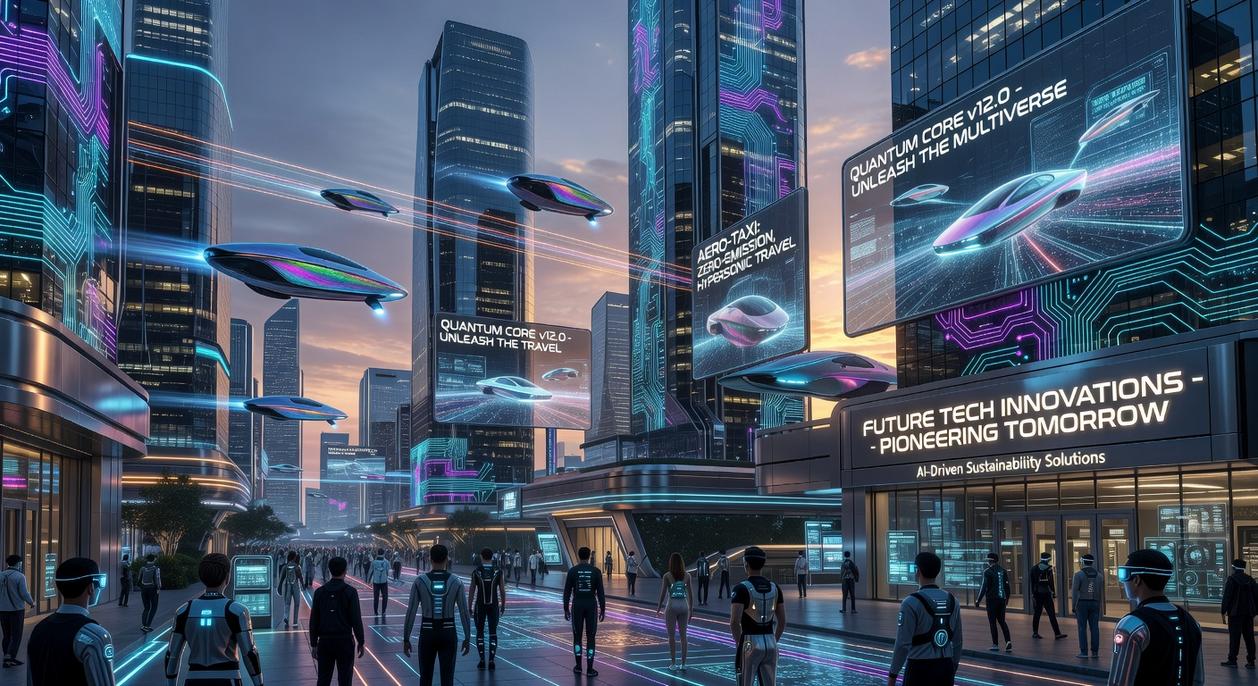
The big shift right now isn’t that AI can write better poems or generate cooler images. It’s that AI is starting to act.
We’re moving from Generative AI—systems that create content when prompted—to Agentic AI, which means AI systems that can independently plan and execute multi-step tasks to achieve a goal. In simple terms, Generative AI is a brilliant intern. Agentic AI is the project manager who figures out what needs to be done and actually gets it done.
If Generative AI writes a report when asked, an AI agent can:
• Research the topic
• Draft the report
• Build the slide deck
• Email it to the team
• Schedule follow-ups
All without you hovering over it. (Yes, it’s a little intimidating.)
For individuals, this is where things get exciting. Imagine an AI agent managing your personal finances—canceling unused subscriptions, negotiating better insurance rates, or reallocating savings based on your goals. Or planning a two-week Japan trip, booking flights, reserving restaurants, and adjusting schedules when your flight gets delayed. That’s not sci-fi. That’s the direction of emerging technologies 2026.
For businesses, the implications are massive. AI agents can:
• Optimize supply chain logistics in real time
• Resolve customer support tickets end-to-end, not just draft replies
• Conduct complex market research and summarize strategic insights
Some argue this is overhyped—that autonomy introduces too much risk. I partially agree. When AI can take action on your behalf, security and ethics become central. Who’s liable if an AI signs the wrong contract? How do we prevent manipulation or fraud?
Still, my view is clear: autonomy is the real breakthrough. Content was step one. Action is step two. And step two changes everything.
Trend 3: The Zero-Trust Data Economy and Digital Identity
The old “castle-and-moat” security model assumes everything inside your network is safe. Firewalls guard the perimeter, and once you’re in, you’re trusted. That worked when employees sat in one office. It fails spectacularly in a world of cloud apps, remote work, and BYOD (bring your own device). According to IBM’s 2023 Cost of a Data Breach Report, compromised credentials remain a top attack vector—proof that perimeter defenses aren’t enough.
Enter Zero-Trust Architecture (ZTA): a framework built on “never trust, always verify.” Every user, device, and application must continuously authenticate before accessing resources—no matter their location. Multi-factor authentication (MFA), device posture checks, and behavioral analytics are common features. The benefit? Even if attackers slip in, lateral movement is restricted (think Mission: Impossible, but the vault re-locks after every step).
At the same time, decentralized identity is shifting control back to users. Using verifiable credentials stored in digital wallets, individuals can prove specific attributes—like being over 18—without revealing a full birthdate. This minimizes data exposure and supports privacy-by-design principles outlined in regulations like GDPR.
Impact on Services
- Password-less logins via passkeys (FIDO2 standards)
- Granular, transaction-level consent prompts
- Reduced data storage liabilities for companies
In the landscape of emerging technologies 2026, expect identity to become the new security perimeter.
What to Look For
- Support for passkeys instead of passwords
- Clear, revocable data consent dashboards
- Transparent encryption and credential verification standards
Pro tip: If a service still relies only on passwords and vague privacy terms, it’s behind the curve (and possibly a future headline breach).
Your Roadmap for the 2026 Tech Frontier
The future is being shaped by environments that anticipate your needs, AI that acts on your behalf, and security systems that verify every interaction. That’s the real story behind emerging technologies 2026.
Staying ahead isn’t about chasing every new device. It’s about understanding these foundational shifts so you’re not caught reacting while others are strategically adapting.
When you align with these trends, you unlock greater productivity, stronger security, and seamless convenience. Start today: identify one area of your work or daily life where predictive systems, autonomous AI, or zero-trust security could give you an edge—and turn insight into action.