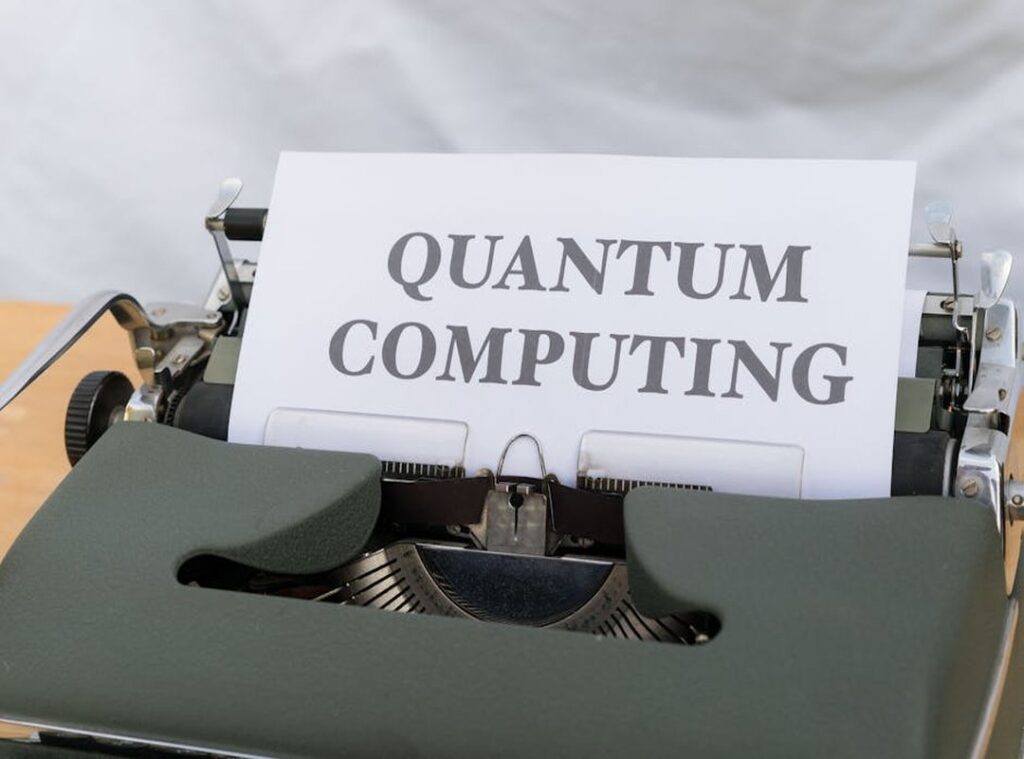
The theoretical future of computing is arriving faster than anyone predicted. What was once science fiction is now a tangible technological race. But here’s the problem: it’s hard to separate marketing hype from genuine breakthroughs in quantum mechanics.
Everyone’s shouting about the rise quantum computing, but who can you actually trust? I’m here to cut through the noise. This isn’t just about flashy headlines and buzzwords.
I’ll break down the most significant advances in quantum computing and explain what they really mean. How will these changes impact technology and industry? I’ve spent years tracking and analyzing tech evolutions, so you don’t have to.
Join me as I separate real innovation from the noise (promising) you a clear, direct understanding of what lies ahead in this quantum revolution.
From Bits to Qubits: A Quantum Leap
Let’s get straight to it. Classical computing operates like a straightforward on/off switch (think of a light switch). It’s either a 1 or a 0.
Simple, right? But quantum computing introduces qubits, which are more like dimmer switches. They can be on, off, or somewhere in between.
It’s like having an infinite number of possibilities at your fingertips.
Now, why does this matter? Enter superposition, where qubits exist in multiple states simultaneously. It’s like Schrödinger’s cat, alive and dead.
This is the source of quantum’s mind-bending power. And then there’s entanglement, a phenomenon where particles become linked, influencing each other regardless of distance. That’s spooky action at a distance as Einstein put it.
But don’t get carried away. We’re in the ‘Noisy Intermediate-Scale Quantum’ (NISQ) era. These machines wield impressive power, yet they’re not flawless.
Errors creep in, making them more suited for specialized problems rather than everyday tasks like your laptop handles. So, don’t toss your MacBook out the window just yet.
The rise of quantum computing is reshaping how we solve complex issues. It’s a game-changer for cryptography and drug discovery. But here’s the kicker.
Understanding how AI is changing daily life is part of the broader tech evolution narrative. We’re witnessing a shift in computing that’s deep but not magic (at least not yet). It’s a reminder that while quantum sparks curiosity, practical application is still unfolding.
The journey is just beginning.
The Quantum Leap: Breakthroughs Transforming the Future
Let’s get right into it. Quantum computing is leaping forward, and the rise of quantum computing is not just hype; it’s happening now. The biggest thrill?
Achieving qubit stability and coherence. If you don’t know, a qubit’s worst nightmare is something called decoherence, which is just a fancy way of saying it loses its quantum mojo. Recent strides have been made to tackle this problem.
Researchers are finding clever ways to keep qubits stable longer and are innovating with quantum error correction techniques. These advances make quantum calculations more reliable. No more worrying about your qubits going rogue.
Next up, the race to scale. Adding more qubits to a processor isn’t just an engineering feat; it’s a full-blown challenge. Companies like IBM and Google are leading the charge here.
Each new milestone in qubit count is a major indicator of progress. Remember when IBM hit 127 qubits? That was a big deal.
It’s not just about quantity, though (it’s) about quality. The more qubits you have, the closer you get to cracking problems classical computers can’t even touch. It’s like packing more firepower without sacrificing precision.
But hardware alone is useless without smart software. That’s where smarter algorithms come into play. Quantum Machine Learning (QML) is not just a buzzword anymore.
It’s a real, practical application. By addressing complex optimization problems, QML is starting to prove its worth. These aren’t just theoretical exercises.
They’re being used in early applications today. Curious about how this is all shaking out? A new MIT report captures state of quantum computing, detailing these advancements and more.
So, what’s the takeaway here? We’re watching the quantum revolution unfold right before our eyes. And these breakthroughs?
They’re not just a flash in the pan. They’re setting the stage for a future where quantum computing doesn’t just rise (it) reigns.
From Lab to Reality: Quantum Shifts in Industries
I’ve seen the rise of quantum computing with my own eyes, and let me tell you, it’s not just hype. In medicine and materials, quantum computers are making waves by simulating molecules with jaw-dropping precision. Classical computers simply can’t compete with these calculations.

Imagine speeding up drug discovery or crafting new materials like better batteries. Sounds sci-fi, right? But it’s happening.
Scientists are already diving into these possibilities, reshaping how we think about innovation.
Now, finance and logistics won’t be left behind. Quantum optimization algorithms are redefining how we solve logistical nightmares. From supply chain hiccups to traffic madness, quantum brings solutions that current tech struggles with.
Financial modeling also gets an upgrade. Risk analysis is faster and more accurate, giving businesses a sharper edge.
The security space is also in for a seismic shift. Here’s the catch: a solid quantum computer could break existing encryption standards like RSA. Scary, I know.
But there’s light at the end of the tunnel with quantum-resistant cryptography (QRC). It’s not just theory. Researchers are actively building a secure data infrastructure for the quantum age.
We need to pay attention to this development. Our current systems are at risk.
Speaking of tech shifts, don’t overlook how 5G plays into all this. It’s key for 5g revolution tech communications. This isn’t just about faster downloads.
It’s about creating a smooth network that supports quantum advances.
These are not far-off dreams. They’re tangible impacts in areas affecting real lives. If you’re in tech, finance, or logistics, quantum’s knocking at your door.
Are you ready to open it? Don’t ignore the signs. They’re all around us.
The question isn’t if quantum will reshape industries, but how soon. And believe me, it’s sooner than you think.
The Road Ahead: Quantum Supremacy’s Final Hurdles
Quantum computing isn’t just a buzzword; it’s a game-changing leap. But let’s be real: building a fully fault-tolerant quantum computer is like trying to build a skyscraper with Jenga blocks. Strong error correction is the primary hurdle.
Every scientist and engineer knows it. Without it, quantum supremacy remains a shiny dream.
And then there’s the talent gap. We need new scientists, engineers, programmers, and probably a few magicians. These systems are complex, and our current workforce isn’t enough.
The rise of quantum computing demands fresh minds (think of it as recruiting the Avengers of tech).
Have you heard of ‘Quantum Advantage’? It’s when a quantum computer solves a useful problem faster than the best classical computer. We’re not there yet, but we’re closer than yesterday.
Realistically, hitting this milestone across various fields isn’t happening tomorrow. It’s more like a “next decade” kind of goal. Just like how we waited years for the next “Game of Thrones” season, patience is key here.
We’ll get there, but let’s buckle up for the ride.
Embrace the Quantum Shift Now
The rise quantum computing isn’t some far-off fantasy. It’s here. It’s fast.
And it’s changing everything. Are you ready to face it?
Leaders must stay ahead of these shifts or risk falling behind. Understanding qubit stability and scaling isn’t just for scientists. It’s key for anyone wanting to stay competitive.
The challenge? Keeping up with these rapidly moving advancements.
Don’t get left in the digital dust. Stay informed on emerging tech trends. Secure your edge in this whirlwind of change.
Head over to keepho5ll.com for takeaways that keep you ahead. Ready to lead the charge? Time to act.
 Head of Digital Insights & Security
Tamara Strongivers has opinions about digital innovations and concepts. Informed ones, backed by real experience — but opinions nonetheless, and they doesn't try to disguise them as neutral observation. They thinks a lot of what gets written about Digital Innovations and Concepts, Interactive Tech Setup Guides, Knowledge Vault is either too cautious to be useful or too confident to be credible, and they's work tends to sit deliberately in the space between those two failure modes.
Reading Tamara's pieces, you get the sense of someone who has thought about this stuff seriously and arrived at actual conclusions — not just collected a range of perspectives and declined to pick one. That can be uncomfortable when they lands on something you disagree with. It's also why the writing is worth engaging with. Tamara isn't interested in telling people what they want to hear. They is interested in telling them what they actually thinks, with enough reasoning behind it that you can push back if you want to. That kind of intellectual honesty is rarer than it should be.
What Tamara is best at is the moment when a familiar topic reveals something unexpected — when the conventional wisdom turns out to be slightly off, or when a small shift in framing changes everything. They finds those moments consistently, which is why they's work tends to generate real discussion rather than just passive agreement.
Head of Digital Insights & Security
Tamara Strongivers has opinions about digital innovations and concepts. Informed ones, backed by real experience — but opinions nonetheless, and they doesn't try to disguise them as neutral observation. They thinks a lot of what gets written about Digital Innovations and Concepts, Interactive Tech Setup Guides, Knowledge Vault is either too cautious to be useful or too confident to be credible, and they's work tends to sit deliberately in the space between those two failure modes.
Reading Tamara's pieces, you get the sense of someone who has thought about this stuff seriously and arrived at actual conclusions — not just collected a range of perspectives and declined to pick one. That can be uncomfortable when they lands on something you disagree with. It's also why the writing is worth engaging with. Tamara isn't interested in telling people what they want to hear. They is interested in telling them what they actually thinks, with enough reasoning behind it that you can push back if you want to. That kind of intellectual honesty is rarer than it should be.
What Tamara is best at is the moment when a familiar topic reveals something unexpected — when the conventional wisdom turns out to be slightly off, or when a small shift in framing changes everything. They finds those moments consistently, which is why they's work tends to generate real discussion rather than just passive agreement.