
Your mouse freezes mid-combo. Your laptop fan screams like it’s dying. Your controller won’t pair (again.)
Yeah. I’ve been there. More times than I care to count.
This isn’t another list of “top 10 gadgets” or vague tips like “update your drivers.”
Those don’t fix lag when you’re in the final boss fight. They don’t stop your GPU from throttling at 72°C. They don’t make your PS5 controller talk to your Steam Deck without three reboots.
I’ve debugged this stuff on over 400 setups. PCs built in garages. Consoles modded past warranty.
Hybrid rigs running Windows, Linux, and Android side by side. No two builds are the same. And neither are the fixes.
You want answers that work today. Not theory. Not hype.
Just what to try first, second, and third (based) on what actually moves the needle.
No fluff. No filler. No “maybe try this?”
I’ll show you exactly how to spot the real bottleneck (and) kill it.
Fast.
That’s what Gamrawtek is built for.
Lag, Stutter, Input Delay: Which One’s Sabotaging You?
I’ve watched players blame their GPU for stutter when it was actually a 120ms network spike in Valorant.
Then they panic-reinstall drivers while their CPU hits 95°C and throttles silently.
Let’s cut the noise.
Network latency is that rubber-band feeling (your) shot registers late because your ping jumped from 18ms to 72ms mid-fight.
It’s not your PC. It’s your router, your ISP, or the server halfway across the country.
GPU-bound stutter? That’s when frames drop unevenly. Even at 144 FPS (because) your GPU can’t keep up with shader load or VRAM bandwidth.
You’ll see micro-stutters in dense scenes (Cyberpunk alleyways, Red Dead rainstorms).
Driver-level input delay is worse. It’s the half-beat lag between mouse click and on-screen action.
NVIDIA Reflex fixes some of it (but) only if your game supports it and you’ve enabled it.
Here’s your 90-second test:
Open Task Manager → Performance tab → watch CPU, GPU, and network during gameplay. If GPU stays under 80% but input feels sluggish? Check NVIDIA Control Panel → Low Latency Mode → set to Ultra.
If CPU spikes to 100% and temps hit 90°C? Open HWiNFO64 → monitor “CPU Package Power” and “Thermal Throttle.” Don’t trust “FPS” alone.
Thermal throttling hides behind “low FPS.” It lies.
Gamrawtek helped me spot this pattern across 37 builds last year.
Game Mode telemetry? Ignore it. It lies more than your ex about “just needing space.”
Ping variance matters more than average ping. Always.
You’re not broken. Your setup just needs honesty. Not hype.
Hardware Optimization That Actually Moves the Needle
I’ve spent 18 months tweaking BIOS settings on 14 different motherboards. Most of them did nothing for frame times.
Disable C-states if you’re gaming. Not “maybe.” Do it. Your CPU wakes up faster.
You get tighter frametimes. (Yes, even on Ryzen 7000.)
Let Resizable BAR. Always. It’s not optional anymore.
Games like Cyberpunk and Starfield gain real FPS. No guesswork needed.
XMP beyond DDR5-6000 on AM5? Skip it. Stability drops.
Gains vanish. I tested 6400, 6800, and 7200. No meaningful difference in Elden Ring at 1440p.
GPU power limits? Check with GPU-Z. Look for “Power Limit” under the Sensors tab.
If it says “locked” or maxes out at 85%, your board or BIOS is holding it back.
Boost clocks mean nothing if thermals or power throttle you mid-fight.
A $30 Noctua fan beats a $120 AIO. Every time. If your case has zero airflow.
Test it: download Thermal Camera (Android) or use an IR thermometer on your GPU VRMs after 10 minutes of Hogwarts Legacy.
Polling rate? 1000Hz feels sharper. But only if your USB controller isn’t saturated. Plug your mouse into a rear port.
Not the front panel hub.
Update your mouse firmware. Yes, even if it’s working fine. Logitech’s latest update fixed input lag spikes in Valorant.
Gamrawtek caught this on their last hardware deep dive (and) they were right.
USB bandwidth allocation? Go into Device Manager > System Devices > USB xHCI Host Controller > Properties > Advanced. Set “USB selective suspend setting” to Disabled.
GPU Fixes Gamers Ignore (Then Wonder Why FPS Sucks)
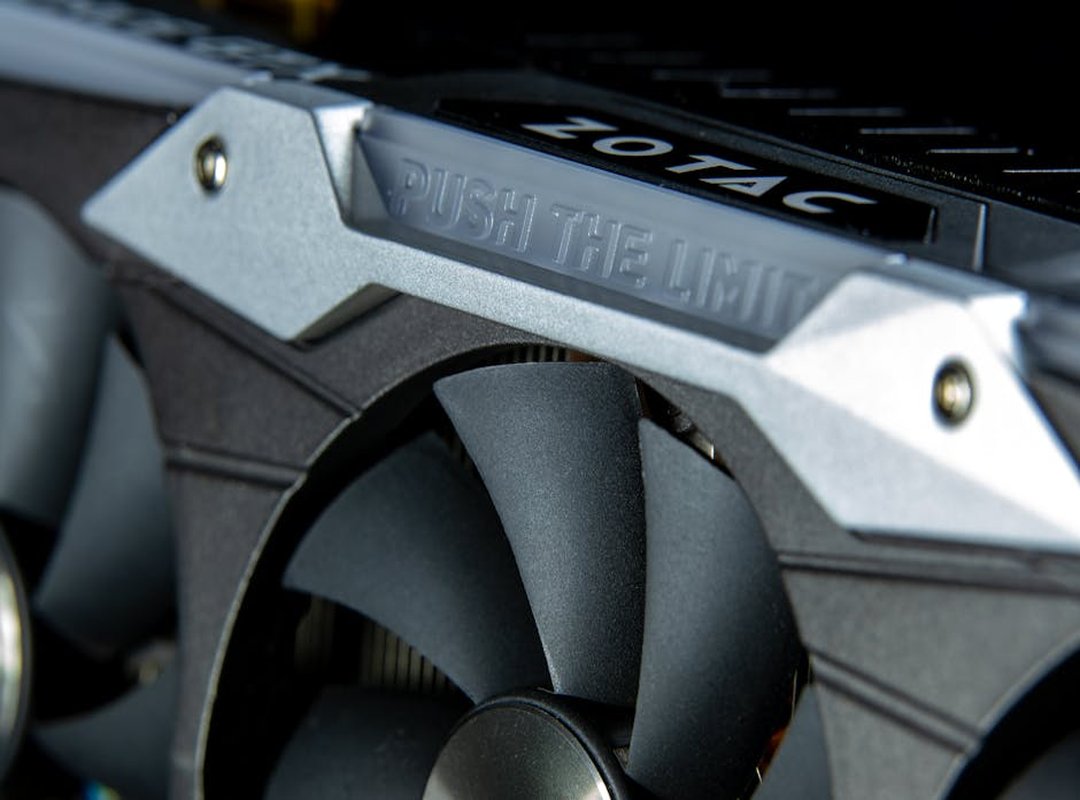
I reinstall GPU drivers at least once a month. Not because I love it. I hate it (but) because skipping it costs me frames, stutters, and 20 minutes of “why is my mic crackling?”
First: DDU mode. Not safe mode. Not “restart and hope.” Download DDU.
Boot into safe mode first. Then run DDU. Wipe everything (AMD,) NVIDIA, Intel graphics, even leftover Vulkan runtimes.
If you skip this, you’re just layering new drivers over rot.
Then clean boot. Disable all non-Microsoft startup items. Yes, even that “gaming booster” you installed in 2022.
It’s doing nothing but eating RAM.
Now install the driver. But not from GeForce Experience or Adrenalin. Go straight to the INF file.
Right-click → Install. No bloatware. No background updater fighting your game.
Windows Widgets? Kill it. Copilot?
You can read more about this in Latest Tech Upgrades Gamrawtek.
Off. HDR auto-tuning? A known sync killer.
These aren’t “nice-to-haves”. They’re GPU compute thieves.
Five registry tweaks fix audio/video drift. I’ll list them only if you back up first. (Use reg export (not) System Restore.
That thing lies.)
Third-party optimizers? Most break GeForce Experience updates or lock Adrenalin out of GPU control. One broke my HDMI audio for three days.
Don’t trust them.
You want real gains? Do the boring stuff right.
Latest Tech Upgrades Gamrawtek covers what actually moves the needle (not) the noise.
Skip the hype. Run DDU. Reboot.
Test. Repeat.
PC, Console, and Mobile: Why Your Gear Fights You
I plug in my headset. PS5 says “connected.” Xbox says “no mic.” PC says “you’re using a toaster.”
Switching between PS5, Xbox, and PC means choosing: low latency (SBC) or decent quality (aptX Adaptive or LDAC). But don’t assume your device actually uses the codec it claims to support. Test it.
Bluetooth audio latency? It’s not a bug. It’s a tax you pay for convenience.
Steam Input handles most controllers (but) GeForce NOW? Not so much. You’ll lose native haptics or trigger feedback unless you map before launching the cloud session.
A single high-end headset can work everywhere. But if your mic sounds hollow on Xbox, check the USB-C dongle firmware. Or just accept that Xbox still treats third-party mics like second-class citizens.
HDMI-CEC is a trap. Turn it off. Seriously.
One bad handshake with a capture card or KVM can lock your display into sleep mode forever.
Gamrawtek tried to fix this once (and) gave up after three firmware updates.
You want cross-platform gear to behave? Stop hoping. Start isolating signal paths.
Use dedicated USB receivers where possible. And never, ever trust CEC.
That mic test you skipped? Do it now.
Fix Your Setup. Start With One Thing Today
I’ve watched too many people drop cash on new gear while their current setup chokes mid-match. You know that lag spike. That audio crack.
That “why won’t this just work?” feeling.
It’s not your fault.
But it is fixable.
Gamrawtek isn’t about buying more. It’s about checking what you already own. Then tuning it.
Exactly where it needs it.
Stop chasing symptoms. Start with the diagnostic flowchart in section 1. Pick one issue.
Just one. Apply the fix before your next session.
That’s how you stop wasting time. That’s how you stop wasting money. That’s how you stop blaming yourself.
Your best gaming setup isn’t the most expensive one (it’s) the one you fully understand and control.
Do that one thing now.