
You get a text that says “Going DND for a bit” or see it in a social media bio. Your mind starts racing, and is this a breakup?
Are they mad? What does DND even mean in a romantic context?
I get it, and it’s confusing and can be anxiety-inducing. You’re not alone in wondering what’s going on.
This article is here to demystify the term ‘DND’ in relationships. We’ll explain its various meanings, including dnd meaning sexually.
By the end, you’ll know the difference between a healthy need for space and a potential red flag. This will help you respond with confidence instead of fear.
Modern communication can be tricky, and I understand the emotional weight it carries in a relationship. Let’s break it down.
From Phone Settings to Relationship Status: The Evolution of ‘DND’
DND stands for “Do Not Disturb,” a feature on smartphones and apps that silences notifications. Simple, right?
But it’s not just about your phone anymore. People started using DND as a way to say they need some personal time, focus, or a break from social interactions.
In a romantic context, DND means something different. It’s a way to communicate a temporary need for space without a long, drawn-out explanation.
Hey, need to go DND for the evening to decompress. You might see this in a text message, as a social media status, or even mentioned in a conversation.
It’s not inherently negative. DND is just a modern shorthand for setting a personal boundary.
Sometimes, DND can be used in more intimate situations, like dnd meaning sexually, where it signals a need for privacy and a break from constant communication.
The shift from a simple phone setting to a complex relationship signal shows how technology and language evolve together.
DND helps us manage our digital lives and our emotional ones too.
Is It a Red Flag? Unpacking the Reasons Behind a ‘DND’ Request
You get a ‘DND’ request from your partner. What now?
Sometimes, it’s nothing to worry about. Needing to focus on a work deadline or dealing with family stress can be valid reasons. Introverts might just need some time to recharge.
Hobbies are important too. Maybe they’re in the zone and don’t want to break their flow.
But let’s be real. There are times when a ‘DND’ is a bit more concerning. Avoiding a difficult conversation, for example.
Or using it as a passive-aggressive way to express anger.
Relationship doubts can also lead to a ‘DND’. They might need space to think things through.
The context matters. A ‘DND’ after a big fight has a different weight than one during a stressful work week.
What was our last interaction like, and is this a recurring pattern? Does my partner typically communicate their needs directly?
These are questions to ask yourself.
The intent behind the DND request is what determines if it’s healthy or a warning sign.
A single ‘DND’ request is rarely a red flag. But a consistent pattern of using it to avoid conflict can be.
Some people argue that any ‘DND’ is a bad sign. I disagree, and everyone needs space sometimes.
The key is to look at the bigger picture.
Is it a one-off, or does it happen all the time? If it’s frequent, it might be worth having a conversation.
In some cases, DND meaning sexually could be a factor. That’s a whole other level of communication that needs to be addressed openly.
Bottom line: context and intent are everything. Don’t jump to conclusions, but don’t ignore patterns either.
How to Respond When Your Partner Goes ‘Do Not Disturb’
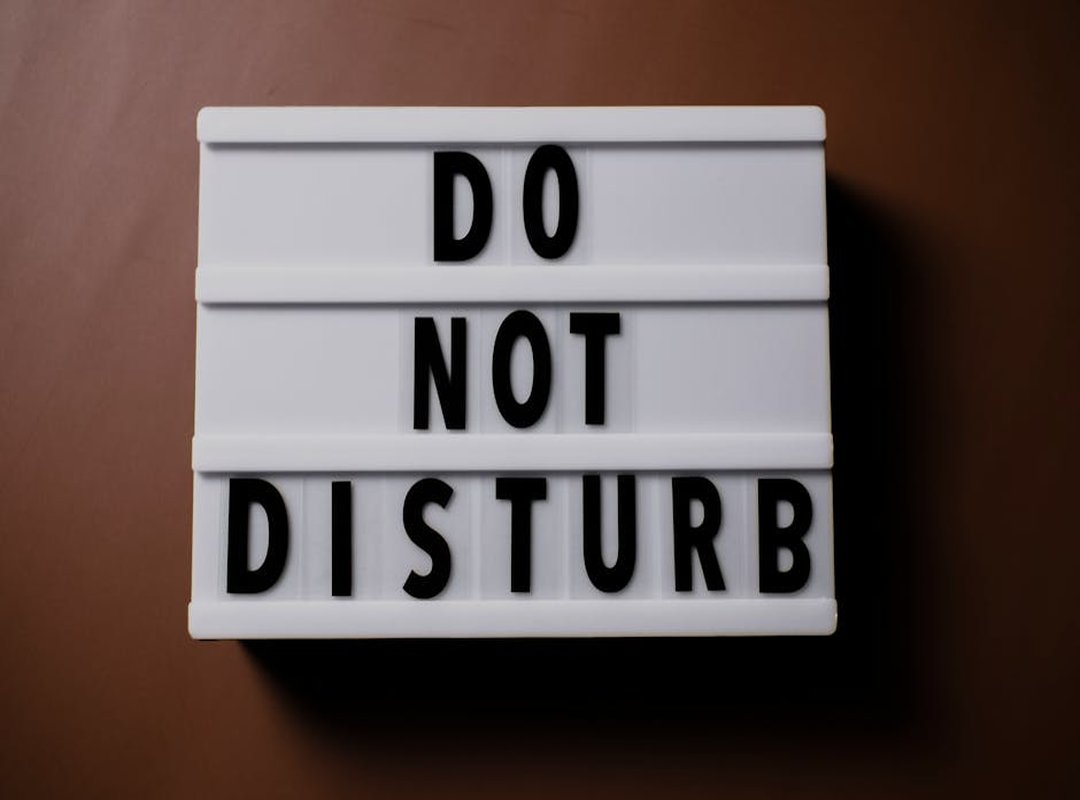
When your partner goes DND, it can feel a bit jarring. What’s the best way to handle it, and acknowledge and respect their request.
A simple “Okay, take the time you need. Talk to you later!” shows trust and support.
Don’t bombard them with questions, demand an immediate explanation, or assume the worst. This violates the very boundary they are trying to set.
A supportive response could be: “Thanks for letting me know. I’m here if you need anything, and let’s connect when you’re ready.”
Calm and respectful responses build trust. They show that you are a safe partner who can handle their need for autonomy.
If it feels appropriate, suggest setting a follow-up time. For example, “No problem. Should we check in tomorrow?” This can ease anxiety without being demanding.
During their DND time, focus on your own hobbies and self-care. Don’t anxiously wait by the phone. (Maybe even tackle a project like setting up a NAS system.
Here’s a guide to get you started.)
It’s worth noting that DND can mean different things to different people. Sometimes, it’s just about needing a break, and other times, it might have deeper implications.
If you’re unsure, it’s okay to admit that. Honesty and openness will help you both navigate this better.
Healthy Space vs. Unhealthy Silence: Knowing the Difference
Healthy space, or DND (Do Not Disturb), is when you take a break to recharge. It’s temporary and clearly communicated, even with shorthand. The goal?
To come back refreshed and ready to engage.
Unhealthy silence, on the other hand, is stonewalling. It’s used as a punishment, lacks a clear endpoint, and is meant to create emotional distance. This can be part of a toxic cycle called the silent treatment.
Key Differences
- Communication:
- Healthy Space: Clearly communicated, often with a set time.
-
Unhealthy Silence: No communication, no set time, just silence.
-
Intent:
- Healthy Space: Recharge and self-preservation.
-
Unhealthy Silence: Punish or control the other person.
-
Duration:
- Healthy Space: Temporary, with a defined end.
-
Unhealthy Silence: Indefinite, often ongoing.
-
Resolution:
- Healthy Space: Ends with a return to normal interaction.
- Unhealthy Silence: Often leads to more conflict and unresolved issues.
Healthy DND is about self-care. It’s not about avoiding the other person but about taking a moment to breathe. Stonewalling, however, is about controlling or punishing the other person.
If DND consistently feels like a punishment, it might be time for a deeper conversation. Ask yourself, is this really about recharging, or is it being used as a tool for avoidance?
Understanding the difference is key. When you see DND meaning sexually in a relationship, it should be a red flag. It’s not about self-care; it’s about manipulation.
Recognize the signs. If you feel like you’re being punished, it’s not healthy. It’s time to talk about your communication styles and find a better way forward.
Building Trust Through Boundaries: The Power of Respecting ‘DND’
DND in a romantic context is a modern way of asking for personal space, and it’s not automatically a bad sign. Understanding the context and responding with respect and trust, rather than anxiety, is key.
By honoring your partner’s need for space, you strengthen the relationship. It proves you are a secure, supportive partner.
The next time you see DND, view it not as a door closing, but as an opportunity to build trust by respecting a boundary.