
Ever feel like your home’s tech is more hassle than help? Juggling multiple apps for lights, thermostats, and security can be a headache. We all crave simplicity, not chaos.
But here’s the thing: are we settling for basic smart home devices when we could have something truly intuitive? This is where the magic happens. I’m obsessed with digital innovations.
I keep up with their evolution (so you don’t have to). Let’s break down what makes a smart home truly intelligent. By the end, you’ll understand intelligent home technology, how it works, and how to create a smooth, secure, future-proof living space.
Beyond Remote Control: Smart vs. Intelligent
When it comes to smart home devices, we often think of gadgets that let you control your lights or thermostat from your phone. It’s convenient, right? But is it truly intelligent?
A smart device is like having a remote for everything. You still have to push the buttons. An intelligent system, on the other hand, feels like having a personal assistant who anticipates your needs.
You don’t have to instruct it; it just knows.
Let’s break it down. Connectivity is the network. It’s what keeps your devices talking to each other.
Sensors and data are the senses. They gather information about your environment. AI and machine learning are the brain.
They process data and make decisions without you lifting a finger. Imagine this: a simple smart thermostat lets you change temperatures from your bed. But an intelligent climate system?
It knows you’re heading home from the gym and cools the house in advance, considering the weather and electricity rates.
This is where the magic happens. The difference between smart and intelligent is adaptability. Does your device just respond, or does it learn and adapt?
Think about how Voice Assistants Enhancing Daily Routine can make your day smoother without constant manual inputs.
(there, I said it), we need tech that doesn’t just follow commands but understands us. So, are you ready to move beyond remote control? Let’s embrace true intelligence in our homes.
Home Intelligence Unleashed: Crafting a Smarter Space
Let’s dive straight into it. Your smart home isn’t just a collection of smart home devices; it’s an detailed web of systems working together. At the heart of it all is the Central Hub.
Think of it as the brain, coordinating everything from your thermostat to your security cameras. I’m talking about controllers like Hubitat or Home Assistant. They unify different brands, letting you create complex automations that work seamlessly together.
Imagine asking your home to dim the lights, lock the doors, and play your favorite playlist as you walk through the door. That’s real intelligence.
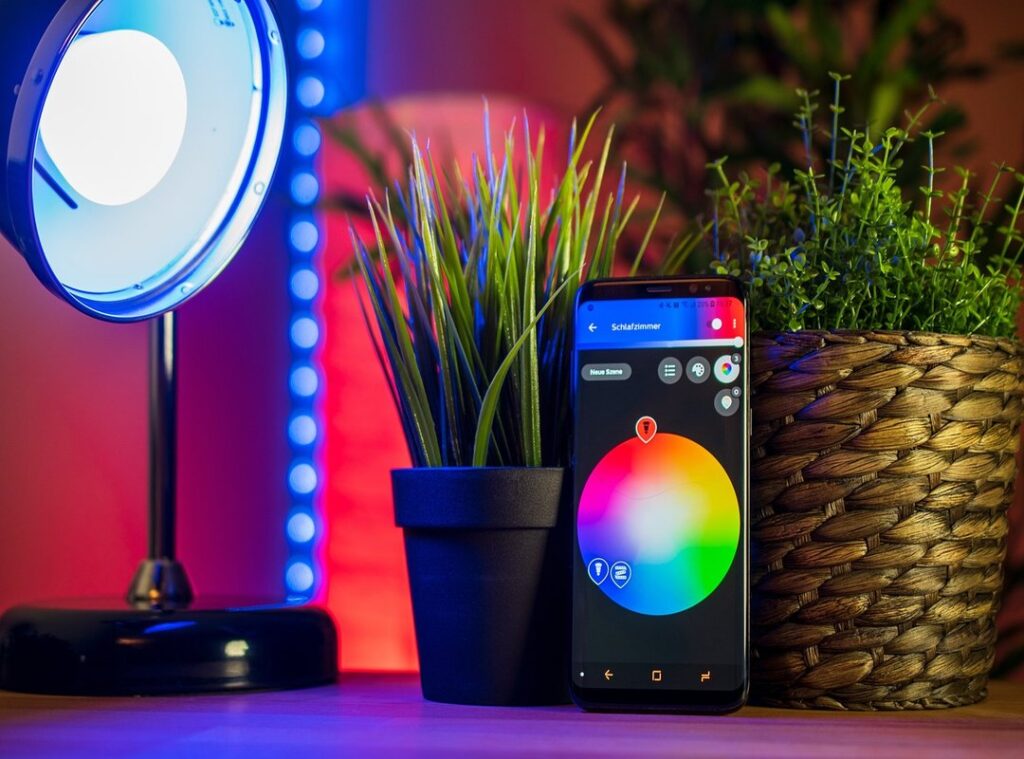
Now, lighting and climate. They’re huge. Adaptive Environments are about more than just turning the lights on and off.
Advanced systems adjust lighting color temperature throughout the day, syncing with your circadian rhythms. Does your thermostat learn your schedule? It should!
Optimizing energy use saves money but also makes life smoother. You walk in, the temperature is perfect, and you didn’t lift a finger. Let’s be honest, we’re all about that convenience.
Security? It’s gotta be more than a camera. Proactive Security systems are your home’s vigilant guardian, differentiating between a pet, a package delivery, and an intruder.
These systems are smart enough to lock doors or turn on lights when necessary. It’s like having a superpower (minus the cape). Peace of mind shouldn’t be a luxury.
It should be standard.
And don’t forget ambiance. Automated Wellness & Ambiance create “The Vibe” you need. Air purifiers that activate based on air quality sensors?
Yes, please. A single trigger for ‘movie mode’ that dims lights, closes blinds, and starts your AV system? That’s living in the future.
For more on future possibilities, check out the best smart home devices 2026: it’s worth a look.
In this interconnected world, your home is more than a shelter. It’s a changing space, adapting and responding to your needs. It’s about time we stop settling for anything less.
The Unseen Foundation: Data and Security in Smart Homes
Let’s get real. The backbone of smart home devices isn’t flashy gadgets. It’s the data they use.

This is the real power, the key layer we often overlook. Without it, all those devices are just expensive paperweights.
A strong home network is important. Think of it as the “nervous system” for your devices. Without it, your smart home is, frankly, dumb.
Ever tried using a smart speaker with poor Wi-Fi? Frustrating, isn’t it? That’s why investing in systems like Wi-Fi 6 or mesh networks is non-negotiable.
They make sure your devices communicate smoothly.
Now, let’s talk about the elephant in the room: privacy and security. It’s a huge deal. People need to trust that their data is safe.
If they can’t, the whole smart home concept falls apart. Addressing these concerns head-on is key.
Here’s what you can do. First, create a separate Wi-Fi network just for your smart devices. This isolates them from your sensitive data.
Second, change default passwords on every device. It’s a pain but necessary. Third, decide between cloud-based and local processing.
Go local if privacy matters to you.
I’ve seen too many people ignore these steps. Don’t be one of them. Be proactive.
Your home’s intelligence depends on it.
By the way, if you’re interested in how iot devices transforming connectivity can redefine your experience, check that out. It’s fascinating how these devices are changing the game.
In a world where data is king, securing your smart home is more than just a good idea. It’s important. Your privacy deserves nothing less.
The Next Wave: Future-Proofing Your Home
Have you ever wished your home knew what you needed before you did? Enter ambient computing. This isn’t sci-fi; it’s the future of how we interact with smart home devices.
Imagine a world where technology disappears into the background, responding naturally to our needs without a screen or specific commands. It’s like having an invisible butler who knows your every preference (and never needs a raise).
But how do we get there? One word: interoperability. The rise of standards like “Matter” solves the age-old problem of devices from different brands not playing nice.
It’s about time, right? We’re finally moving towards a home where your lights, thermostat, and fridge can talk to each other without losing their minds. It’s like getting your friends to agree on a dinner location (without the endless texts).
Then there’s predictive capability. AI is stepping up, enabling homes to perform self-diagnostics. Imagine your dishwasher alerting you before a part fails.
No more water floods when you least expect them. This is the kind of proactive maintenance that makes life smoother, and frankly, who wouldn’t want that?
Generative AI also plays a role, creating hyper-personalized automations based on simple language requests. Forget about complicated programming. Just tell your home what you want, and it does it.
We’re talking sci-fi level convenience here, folks.
Pro tip: Keep an eye on these trends. It’s not just about the gadgets; it’s about how seamlessly they fit into our lives. As smart home devices evolve, so should our understanding of their potential.
Start Your Smart Home Journey Now
I get it. Managing a bunch of smart home devices can feel like juggling. But the future isn’t about collecting gadgets; it’s about building a connected, intelligent home that simplifies your life.
Why stick with the hassle of individual devices when you can have a home that listens, learns, and adapts? Focus on connectivity, data, and security (the real game-changers). Ask yourself: What daily hassle can I automate today?
That’s your first step. Dive in, discover the difference, and transform how you live. Curious?
Go beyond devices. Start building a truly smart home now.
 Founder & Chief Innovation Officer
There is a specific skill involved in explaining something clearly — one that is completely separate from actually knowing the subject. Drathen Zelthorne has both. They has spent years working with secure data infrastructure insights in a hands-on capacity, and an equal amount of time figuring out how to translate that experience into writing that people with different backgrounds can actually absorb and use.
Drathen tends to approach complex subjects — Secure Data Infrastructure Insights, Interactive Tech Setup Guides, Digital Innovations and Concepts being good examples — by starting with what the reader already knows, then building outward from there rather than dropping them in the deep end. It sounds like a small thing. In practice it makes a significant difference in whether someone finishes the article or abandons it halfway through. They is also good at knowing when to stop — a surprisingly underrated skill. Some writers bury useful information under so many caveats and qualifications that the point disappears. Drathen knows where the point is and gets there without too many detours.
The practical effect of all this is that people who read Drathen's work tend to come away actually capable of doing something with it. Not just vaguely informed — actually capable. For a writer working in secure data infrastructure insights, that is probably the best possible outcome, and it's the standard Drathen holds they's own work to.
Founder & Chief Innovation Officer
There is a specific skill involved in explaining something clearly — one that is completely separate from actually knowing the subject. Drathen Zelthorne has both. They has spent years working with secure data infrastructure insights in a hands-on capacity, and an equal amount of time figuring out how to translate that experience into writing that people with different backgrounds can actually absorb and use.
Drathen tends to approach complex subjects — Secure Data Infrastructure Insights, Interactive Tech Setup Guides, Digital Innovations and Concepts being good examples — by starting with what the reader already knows, then building outward from there rather than dropping them in the deep end. It sounds like a small thing. In practice it makes a significant difference in whether someone finishes the article or abandons it halfway through. They is also good at knowing when to stop — a surprisingly underrated skill. Some writers bury useful information under so many caveats and qualifications that the point disappears. Drathen knows where the point is and gets there without too many detours.
The practical effect of all this is that people who read Drathen's work tend to come away actually capable of doing something with it. Not just vaguely informed — actually capable. For a writer working in secure data infrastructure insights, that is probably the best possible outcome, and it's the standard Drathen holds they's own work to.